
Celebrating the most weird and wonderful attractions Japan has to offer, there are some rather unique and unusual things to do in Tokyo.
From a ‘crap’ museum to maid cafes, haunted houses to curious capsule toys, there are lots of wonderful and weird Tokyo attractions.
This post may contain affiliate links to tours and hotels. These help us earn a small commission at no additional charge to you.

A utopia of the unusual, Tokyo has tonnes of freaky, fun finds including the new TENGA Land (very ‘stimulating’) to an underground sake ninja bar.
With something to suit all tastes (including a huge giant golden rooftop ‘turd’), here is our guide to the most weird and wonderful, unique Tokyo things to do in 2025.
This article was originally published on 11 June 2024.
Japan checklist
We love using booking.com and agoda.com (use the Agoda code TAIWANDERERS for a discount) for researching and booking all our hotels. You can also purchase eSIMs from Airalo.
For booking tours, transfers and SIM cards we recommend Get Your Guide, Viator or Klook.
For booking rental cars visit Discover Cars.
Check out our Japan travel resources page >
Tokyo unusual, weird and wonderful things to do
1. View the golden turd of Asakusa AKA Asahi Beer Tower
One of the unusual Tokyo finds is the ‘golden turd’ located in Asakusa. Well it isn’t actually meant to be this but many locals think it resembles a giant dump – and we don’t want to ‘poo-poo’ the idea.

Walk down to Sumida River Walk by Azuma Bridge and take a look up – you’ll see the Asahi Beer Head Office (said to look like a pint of beer). They must have a few free beers in the office when coming up with the design ideas!
The sculpture on the top was commissioned by Asahi at great cost (what a ‘crap’ waste of money) and is meant to look like a yellow flame as well but the locals jokingly thought it just looked like ‘sh*t’ – literally!

2. Odaiba Statue of Liberty
No, you aren’t seeing things as you approach Odaiba – there really is a replica, scaled down version of the Statue of Liberty in Tokyo.
A little bit of the USA in Odaiba, this novel New York replica was unveiled over 20 years ago as a sign of appreciation to the people of France for the ongoing positive relationship between Japan and France – sugoi!

Although smaller than the real thing (it is 1/7th scale), the Odaiba Statue of Liberty is an incredible replica and free to visit.
Another utterly unusual thing to do in Tokyo, it may come as a surprise that this isn’t the only Statue of Liberty replica in Japan – there are ‘sister’ statues in the Osaka American Village and Shimoda.
3. NinjaBar Asakusa
Heard about the ‘underground’ ninja bar in Tokyo? Asakusa is usually associated with Sensō-ji and Kappabashi street but beneath its streets lies a very unique and unusual thing to do in Tokyo – the subterranean NinjaBar, Tokyo’s top themed ninja bar.

A sake and beer bar operated by a secretive and stealthy ninja, the NinjaBar is a fun night out in Asakusa and a fun experience with over 300 sakes to choose from.
From the quirky interiors to drink prices (and the samurai sword toilet key), release your inner ‘otaku’ with our full guide to drinking in Tokyo’s NinjaBar >

4. Unko Museum / Poop Museum Tokyo
‘Poop culture’ at its finest and one of the ‘cr@ppiest’, unique things to do in Tokyo – but in a weird and wonderful way!
Best described as a poop inspired Tokyo theme park, the Unko / Poo Museum might not be for everyone (don’t poo-poo the idea) but kids will surely love it.

From big pink poos to colorful ‘cr@ps’, Unko Museum in Odaiba is very different from most other Tokyo attractions.
One of the immersive activities is to sit down on a toilet, yell “UNKOOOO!” and generate your own poop friend that will accompany you inside (we are not making this up) – or take a dive in a ‘poop-filled’ ball pit (!!!).
Unko Museum / Poop Museum Tokyo tickets cost 1,900 Yen per adult and 900 Yen for children aged 4 to 12.
Book your discounted Unko / Poop Museum Tokyo tickets here >
Join our Facebook Japan Travel Tips Group!
Need help with your Japan itinerary or have any questions?
Head on over to our friendly Facebook group with 130,000+ members and ask the experts!
Click here to join our group >
We also run a brand new Japan Hauls, Souvenirs and Shopping Tips group >
Or if you just want to see more of our Japan photos and videos, follow our Plan My Japan Facebook page >
5. Unicorn Gundam Statue
Odaiba is known for its crazy attractions and theme-park style attractions – it should come as now surprise then that Odaiba is also home to a giant Gundam robot / mecha statue.
20 metres high and a towering presence, this massive mecha model is a lifesize RX-0 Unicorn Gundam replica that springs into life every hour, gathering a huge crowd.

The model moves and changes between its Unicorn and Destroyer modes (to be honest, the Unicorn Gundam statue ‘transformation’ isn’t that great). The only change is the Unicorn mode has a huge spike / horn on its head whilst the Destroyer mode has extra lights.
That said, we saw the performance in the daytime but it is meant to be better in the evenings when lit up.

The Odaiba DiverCity Unicorn Gundam Statue ‘show’ / performance happens daily at Unicorn Gundam Statue at 11am, 1pm, 3pm and 5pm.
At night, the Unicorn Gundam statue transforms every 30 minutes from 7pm to 9.30pm.
Read more in our guide to the Unicorn Gundam statue >
6. TENGA Land
One of the more ‘stimulating’ things to do in Tokyo (ahem), the new adult store TENGA Land opened in 2024 in Tokyo Plaza Harajuku ‘Harakado’ and is quite the arresting attraction – make sure you ‘come soon’.
Possibly best described as a suction tube showroom(!), we’re so ‘excited’ to learn more about TENGA, Japan’s top (self) love toy.

There are lots of lovely latex gadgets and fantastic plastic gadgets on display here that bring the male ‘members’ of Japan great ‘pleasure’.
TENGA suction cups are a popular self-love tool widely available in adult shops and even Don Quijote stores, Japan’s largest discount chain. Tens of millions of TENGA products have been sold in over 40 countries worldwide too.
Tokyo’s TENGA Land in Harajuku is totally unique, weird and wonderful BUT possibly not for everyone so find out more in our guide to all things TENGA >

7. Daikon radish festival at Matsuchiyama Shoden
Yes, you read that right – in addition to the more famous Asakusa annual Sanja Matsuri festival, there is a lesser known daikon radish festival held every 7th January at Matsuchiyama Shoden.
This was definitely one of the more unique Tokyo festivals we’ve been to.

We were lucky enough to catch the Daikon Radish festival one January afternoon whereby worshippers gift daikon radishes to the deity Shōden.
Hundreds of radishes are left in the main hall at Matsuchiyama Shoden, culminating in them being chopped up, served with miso and given back to locals.
The Tokyo Daikon Radish festival at Matsuchiyama Shoden lasts one day (7th January) and we also witnessed a traditional dance show and puppetry performances. The daikon radish festival is free to attend.

8. Tokyo’s Gorilla FamilyMart, Sangenjaya
Or as we like to call it, the King Kong Konbini! We recently made a pilgrimage to this gorilla themed FamilyMart in Sangenjaya.

It was built in 1979 to help promote a local shopping center and has stayed swinging from the top ever since. The huge King Kong style statue also has a huge hand that is holding a damsel in distress.
Sadly the FamilyMart itself doesn’t have any theming as we really wanted to buy some giant gorilla gifts as some unusual souvenirs.
Read more about this Gorilla FamilyMart in our guide >
9. ARISA the Tokyo Tourist Information Robot
Yes, that is right – located next to the Toei Oedo Line entrance at Shinjuku-nishiguchi station, the underground Tourist Information center has an AI robot out front called Arisa, unveiled in 2020.

You can interact with ARISA in several languages (including English) and even have conversations with the robot – well, more so if it is transport related. It didn’t answer any of our stupid questions like whether it had heard of our Plan My Japan website etc.
A very weird and wonderful Tokyo ‘underground’ activity, this is a fun way to get transport information. There is also a second ARISA robot at Shimbashi Station on the Toei Asakusa Line.

You might like these Tokyo neighbourhood guides:
Akihabara
Asakusa
Ginza
Harajuku
Ikebukuro
Nakano
Odaiba
Ryogoku
Shibuya
Shimokitazawa
Shinjuku
Also check out our
Where to stay in Tokyo guide
10. Fantastic plastic at Kappabashi Street / ‘Sampuru’
Asakusa’s Kappabashi Street is a culinary gem – often referred to as Tokyo’s Kitchen Tool Street or fake food capital, this is where you can buy a huge range of kitchenware, Japanese knives plus a cavalcade of cutlery. And oh yes, don’t forget to look for the giant chef’s head and giant signs.

Better yet, this is a unique Tokyo thing to do as Kappabashi street is where you can buy or make your very own fake plastic Japanese foods (sampuru) – the ones you see in numerous restaurant windows.
You can make everything from plastic pork dishes to sampuru sushi – talk about fantastic plastic. It looks good enough to eat (but please don’t)!
Try these Kappabashi street tours and food making experiences or this Japanese Plastic Food Making Experience.
Read more in our guide to Kappabashi Street >

Love cute and ‘kawaii’ stores in Japan?
Check out our shopping guides!
• Tokyo Character Street stores
• Studio Ghibli stores
• Don Quijote stores
• Doraemon Future Department store
• B-Side Label stores
• Mandarake stores
• Best Gachapon Capsule toys
• Pokémon Center Mega Tokyo
Plus our guide to the best kawaii things to do in Tokyo >
11. Tokyo Manhole covers
Japan is one of the most unique countries in the world but not just because of its scenic landscapes or natural wonders – look down towards the sidewalk and you’ll see joyful Japanese manhole covers with incredible designs and artwork, especially in Tokyo.

Such as their fame and local enthusiasm, there is even a ‘Manhole Cover Association’ / Japanese Society of Manhole Covers that seeks to promote and protect these sublime sidewalk masterpieces.
Some of the most unique manhole covers in Tokyo we’ve seen include
- Sumo wrestling manhole covers in Ryogoku, Tokyo’s traditional home of sumo wrestling
- Godzilla manhole cover in Kabukicho
- Tokyo 2020 manhole covers
- Pokémon manhole covers
- Firefighters fire hydrant cover in Shinbashi
You might like our guide to the cult of Japanese manhole covers >

You might like these Japan chain restaurants guides
A Happy Pancake >
CoCo Ichibanya >
Denny’s >
Kura Sushi >
Matsunoya Tonkatsu >
Mister Donut >
Saizeriya >
12. Tokyo’s Onigiri Shrine
Located in the shadow of Tokyo Skytree and a very ‘rice’ thing to do (sorry not sorry), Tokyo’s onigiri shrine is called Hikifune Takagi Shrine and can be found on Google maps here >

The shrine first dates back to the 15th century – over the years, it has become a shrine to onigiri as it is dedicated to deity Takami-musubi and another name for onigiri is omusubi.
Now people visit and leave behind onigiri trinkets and plushes as good luck fortunes – you can even buy onigiri shaped ema (wooden plaques) to write your wishes and hang up by the temple from the onsite shop.
Read more about the onigiri shrine in our guide >

13. Street Art Toilet Tunnel / ‘We Road’
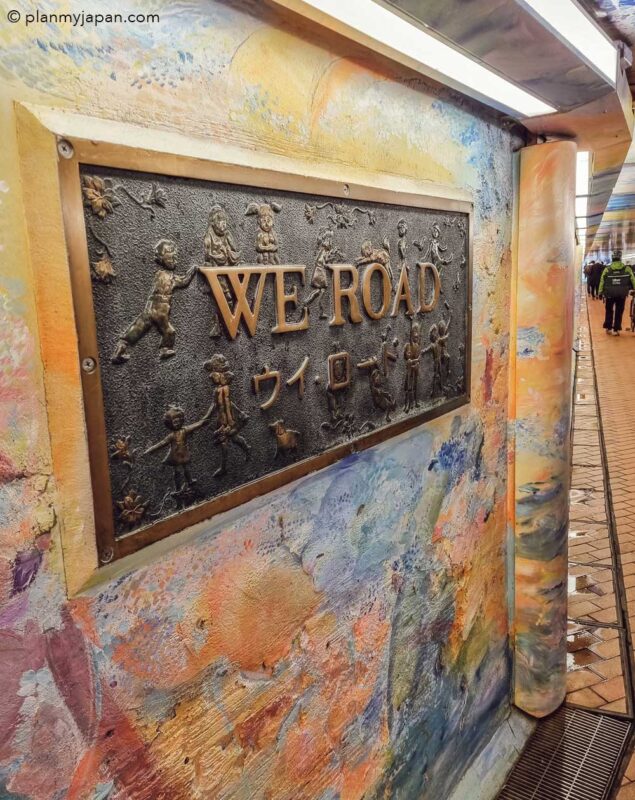
No, you aren’t imagining things – one of Tokyo’s weirdest and most unusual tourist attractions is the Ikebukuro Zoshigaya Tunnel and toilet block – honestly, we aren’t taking the p*ss.
Located underneath Tokyo’s Ikebukuro Station, this tunnel was spruced up by local artists and named ‘We Road’ (we think ‘Wee Road’ would be better)!

However in 2022, a very artistic toilet block opened right next to the tunnel in order to encourage people to stop using the tunnel as a toilet.
This well wicked WC has artwork inside (kind of like a space-scene) plus roof adornments – definitely one of the more weird and wonderful things to do in Tokyo.
14. Shinjuku Godzilla Head
Perhaps the most famous sight and attraction in Shinjuku, the ‘roarsome’ Godzilla head sits atop Hotel Gracery Shinjuku and the Shinjuku Toho Building, looking out across Tokyo’s sublime cityscape.

If you are lucky enough to stay at Hotel Gracery Shinjuku, there are even some rooms you can pay a premium for to look out across the city with Shinjuku Godzilla’s head in shot. Plus there is a small viewing deck next to it and lots of Godzilla theming across the hotel.
Don’t worry, if you aren’t staying in the hotel, you can still get a great view of Shinjuku Godzilla from Shinjuku Central road, next to Don Quijote Shinjuku Kabukicho.

15. Shirohige’s Cream Puff Factory – Tokyo’s Totoro Cream Puffs
Heard about the official Studio Ghibli bakery in Shimokitazawa? Shirohige’s Cream Puff Factory is a must visit for any true My Neighbour Totoro, chock full of cute choux pastries and super cool cookies all themed like Totoro.

Shirohige’s Cream Puff Factory Daita consists of a ground floor bakery (where you can grab takeaway treats) and also an upstairs seating area and Studio Ghibli / Totoro themed cafe (also known as TOLO).
This totally unique Tokyo cafe is allowed to produce Totoro themed cream puffs and Cat Bus shaped cookies as it was founded in 2007 by the sister in law of Studio Ghibli’s visionary founder, Hayao Miyazaki.
Check out our guide to visiting Shirohige’s Cream Puff Factory here >
16. Tokyo 3D Billboards
Fun for all ages at night in Tokyo (and free), huge crowds gather to watch several huge immersive 3D billboards across Tokyo, featuring immersive cartoon characters like a 3D cat or playful panda.

As of 2025, there are five huge and popular 3D billboards in Tokyo:
- the calico cat in Shinjuku (the very first 3D billboard that started it all off)
- the adorable akita inu puppy in Shibuya
- a playful panda near Shibuya Crossing
- another 3D Panda in Ueno by the Hirokoji Entrance of Ueno Station
- a 3D billboard in Harajuku at the end of Takeshita Street with musical animals
Check out our guide to the cult of 3D billboards in Tokyo >
17. Puri-kura a plenty – Japanese photo booths
Looking to take a cute Kawaii selfie or pop into a Japanese photo booth? There are plenty of ‘puri-kara’ photo booth stores in Harajuku especially along Takeshita Street.

Purikura Noa is one of the most popular Puri-kara / photo booth stalls here.
You can choose character backgrounds or cosplay outfits, plus there are even make-up stations and tables full of props and plushies – so get snap happy!
18. Anakuma Bear Paw Café
If you are on social media, you’ll have likely seen videos about the viral Harajuku hole and hand-in the wall cafe.
Harajuku’s Anakuma Café is famous for its mysterious bear paw that serves you drinks from its bear cave.

Place your order on a tablet and a few minutes later, a bear paw pops through the hole in the wall to hand you your drink – be sure to order the special bear bottle.
The ultimate Kawaii coffee, Anakuma Café is a short walk from Takeshita Street and hard to miss as it has a bright green interior (plus there is a frigging great bear inside!)
Get your Anakuma Café coupons (drinks, food sets, etc.) in Tokyo here >
Read more about Anakuma Café in our guide >

19. Gachapons
There is nothing unusual per se about gachapon capsule toy stalls but if you haven’t been to Japan before, you might find some of the contents a little weird but wonderful.

And we aren’t just talking about animals in saunas, miniature food or onigiri cats – some of the most unique, cool and weird gachapons we’ve seen include:
- Tiny Business Hotel Furniture
- Toy COVID Body Temperature Sensors
- Sanrio Character Animal Bum Fridge Magnets
- Miniature Turnstile Entrance Gates
- Bird Watching Boots Gachapon
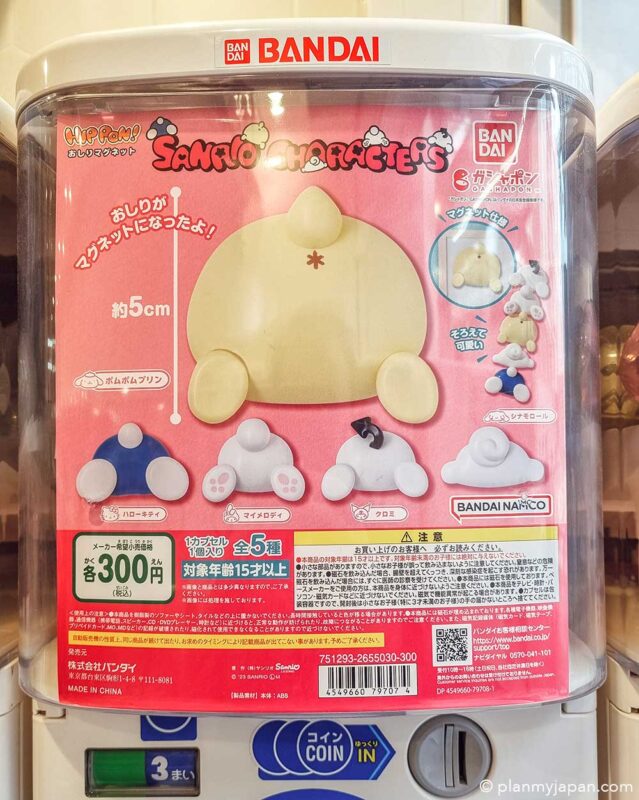


Incidentally, there are loads of gachapon shops in Tokyo but the world’s biggest gachapon shop – Gashapon Ikebukuro Main Store can be found in Tokyo’s Ikebukuro neighborhood with over 3,000 toy capsule machines. Don’t forget those 100 Yen coins!
Read our Plan My Japan guide to over 40 unusual gachapon capsule toys here >
20. Akihabara Maid Cafes
Maid in Japan! Ask anyone about what first comes to mind when mentioning Akihabara and it is likely they’ll say Maid Cafes.
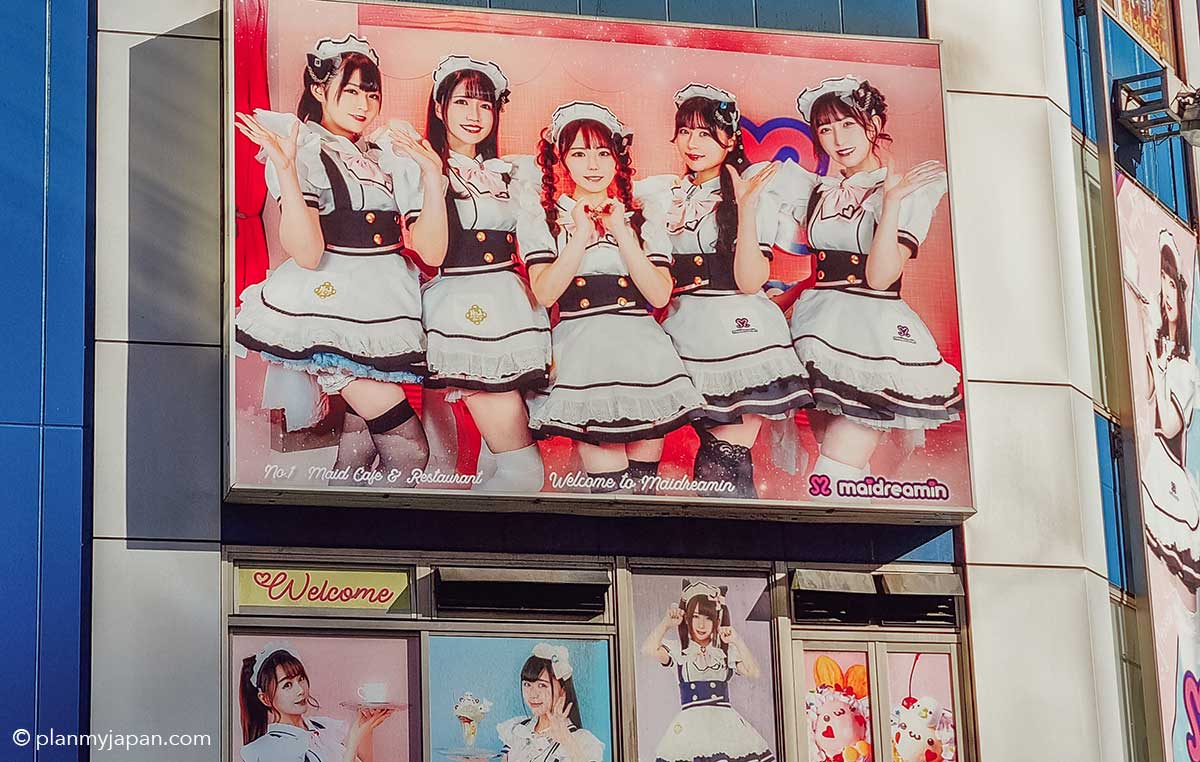
At the time of writing, there are at least a dozen maid cafes in Akihabara and most of them have huge banners and billboards (professional, not home-maid…sorry not sorry) on the sides of tall buildings looking down over the streets.

Each maid cafe / cosplay cafe is different (most don’t allow photographs inside) and popular Akihabara maid cafes include HoneyHoney Akihabara, Maid Made and Cure Maid Cafe. The most popular Maid Cafe chain in Akihabara (and in Japan generally) is Maid-Dreamin.
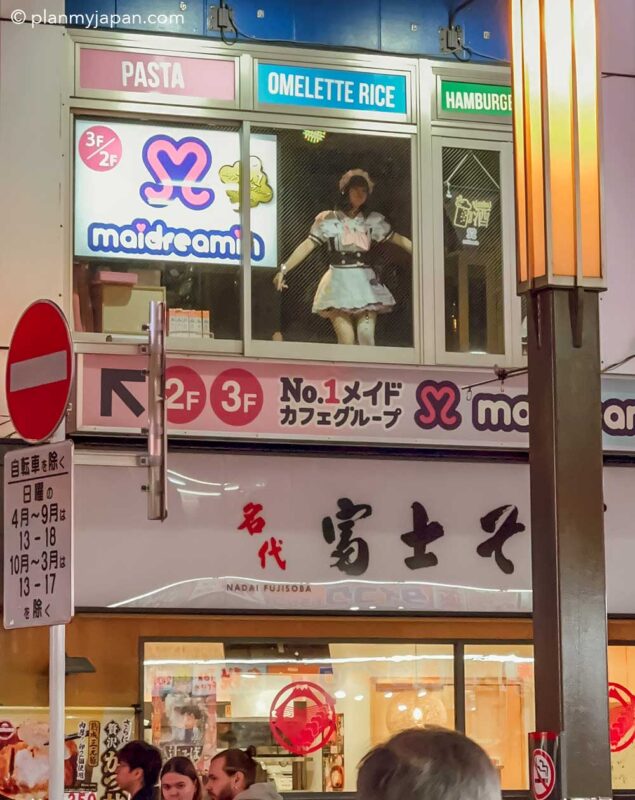
Expect to pay higher than normal prices for the food and drink inside maid cafes plus some wonderfully wacky service – book your Maid Dreaming experience here >
You might like this Maid Cafe Akihabara experience >

21. AKB48 Theater live music venue
‘Give Me Five’! One of J-pop’s most iconic girl groups (with a mainly male fan-base), AKB48 is named after the Akihabara area and regularly perform in the AKB48 Theater, which is (weirdly) above the Don Quijote Akihabara store.
Formed in 2005, the AKB48 girl group has had many different members over the years (and various versions including trainees) and is one of the biggest selling Japanese female acts of all time.
The AKB48 Theater in Akihabara is a way to see the girl group (or a version of it) up close (and well attended by sweaty men with glow sticks) – weird!
Such is the AKB48 phenomen, they even have international AKB48 theatres and groups overseas in countries such as Taiwan and China.
AKB48 Theater tickets are not easy to come by – the theater only has a capacity of 250 people (so you can get up close) and AKB48 tickets are usually allocated by lottery.
You can increase your chances of getting AKB48 tickets by becoming a paying member of their fan-club.
22. Ghibli Clock / Ni-Tele Really Big Clock
A little bit of steampunk and Studio Ghibli in Ginza, make sure to make ‘time’ to see this colossal and cool clock!
Created by Ghibli founder Hayao Miyazaki and built by Kunio Shachimaru, the Ghibli clock (AKA Ni-Tele Really Big Clock) has to be seen to be believed and is located at the Shiodome Media Tower.

Recently named as one of Tokyo’s best public art sculptures, the Ghibli clock and surrounding artwork is around 18 meters long and twelve metres high and comes to life several times a day in a three minute show that runs like ‘clockwork’ (sorry not sorry).
Said to be inspired by Howl’s Moving Castle, the clock springs into life four times a day on weekdays at noon, 3pm, 6pm and 8pm, and 10am on weekends.
Although a water feature acts as a natural barrier to the clock, the walkways allow you to get up pretty close to the Ni-Tele Really Big Clock. Unlike say the Ghibli Museum, the Ghibli Hayao Miyazaki clock is also free to visit.
Read more in our guide to the Ghibli clock >
Check out our guide to the best Studio Ghibli things to do in Tokyo or our guide to Donguri Republic Studio Ghibli stores.
23. Karaoke ferris wheel at Tokyo dome
Japan loves karaoke and ferris wheels – so why not combine the two! Take a spin and sing a song on the Tokyo Dome Big O Ferris wheel, also known as Tokyo’s Karaoke Ferris wheel.
The world’s first centerless ferris wheel now also has JOYSOUND karaoke machines aboard every one of the 40 capsules so you can sing to your heart’s content on a 15 minute spin.
You can find the karaoke song list here – we can’t believe they didn’t include ‘Spinning Around’ By Kylie Minouge or ‘Ferris Wheel’ by the Imagine Dragons.
Tickets for the Big O Ferris wheel cost 1,000 Yen per person or save money and buy this Tokyo Dome City Attractions Ride 5 Ticket with Klook >
24. Odaiba Takoyaki Museum
Not so much a museum as a fantastic food-court dedicated to different types of Japan’s famous takoyaki balls (battered balls that usually contain octopus, pickled ginger and spring onion / scallions).

Like a takoyaki theme-park, the Odaiba Takoyaki Museum food-court has some really nice theming plus several stalls all doing slightly different types of takoyaki.
Try the Osaka original version with octopus or try a mixture of different flavours like cheese or mentai.
As we love takoyaki, we thought Tokyo’s Takoyaki Museum was wonderful but if you aren’t a fan, there are lots of other unusual things to do in Odaiba including haunted houses and immersive experiences.

25. Hachikō memorial statue
Japan’s most famous dog, Hachikō was a faithful hound (Japanese Akita Dog) who waited for his master every day outside Shibuya train station for almost 10 years after his owner’s death (so sad).
Hachikō’s owner, Hidesaburō Ueno, would leave for work every day and Hachikō would stroll down to Shibuya station at the same time every day to greet him home. This continued for 9 years and 9 months after Ueno’s death, until Hachikō also died.

There have been several Hachikō Memorial Statues cast (the original from the 1930s was recast to help with the war effort) and the current Hachiko dog statue outside Shibuya station has been there since 1948. It has become a very unusual tourist attraction in Tokyo.
Every 8 March is Hachikō day when hundreds of dog owners and well-wishers congregate by the statue to remember Japan’s most loyal dog.
26. Love Hotel Hill / Tokyo Love Hotels
If you feel the need to rent a hotel by the hour in Shibuya (lucky you), head to the Love Hotel Hill.
Tokyo is known for its love hotels and Shibuya is a hotspot of hourly hotels, known for their affairs and romantic themed rooms.
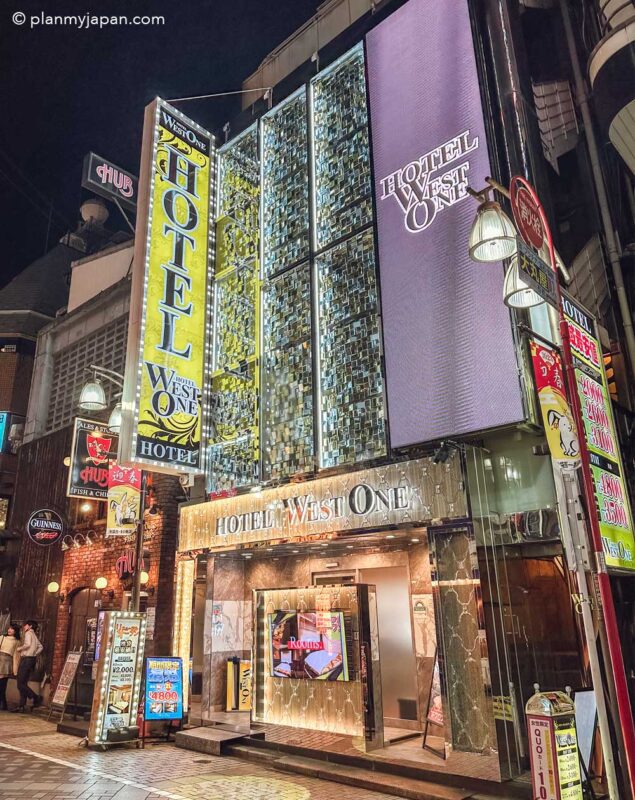
Ikebukuro is another district with a hotchpotch of hourly hotels and themed hotels like Hotel West One.
It is quite the weird experience and you can even see some quite weird and wonderful posters in the hotel windows where you can rent toys and the like.
You might like – Our guides to Japanese convenience stores including 7-Eleven, Lawson and FamilyMart
27. Gotokuji Cat Temple
Also known as the neko or lucky cat temple in Tokyo, we were ‘cat-atonic’ to visit the Gotokuji Cat Temple one fine afternoon sunlight when the red autumn leaves were out.

A beautiful Buddhist temple that is popular with tourists (especially cat lovers), Gotokuji Cat Temple is home to tens of thousands of waving good luck cats in various shapes and sizes, all of which have been left there by worshippers – it really is a surreal but ultimately sublime experience.

Legend has it that Gotokuji Cat Temple came about after a temple cat invited in a lord who was passing by to shelter from the rain – in gratitude, the Lord donated land and wealth to the temple and the cat became a lucky charm.
28. Rent a friend
So this isn’t something we’ve personally done but there are loads of Instagram stories and TikToks about renting friends or grandparents in Tokyo, to accompany you whilst sightseeing, help you carry shopping or generally just be a shoulder to cry on.
Or you can even hire a fake boyfriend or girlfriend if you want to make someone jealous or introduce them to your parents.
One of the most well known Japanese rent a friend companies is called Client Partners – otherwise you can always find local guides and tours via Get Your Guide >
29. Daiba Mysterious School / Haunted School
A spine-chilling and unusual thing to do in Odaiba, dare you explore the Daiba Mysterious School and Haunted House?!
Reminiscent of Japanese horror movies like The Grudge or Ringu, this is a ghostly adventure aimed at ages 6 and above.
Are you brave enough to face the weird challenges in this desolate and decrepit old school room, full of spine-tingling scares and blood curdling bodies?
Armed with just an old flickering torch, save the souls of students and escape as quickly as you can.
Book your Daiba Haunted School ticket with Klook >
30. Weird animal cafes
Tokyo has a slight weird obsession with unusual animal cafes, from hedgehog cafes to otter cafes, dog dessert places to chinchilla cafes.
We’ve written about this in more detail in our Takeshita Street guide but some of the more bizarre cafes include Wakabayashi Otter Cafe, Mipig cafe and the Harajuku Mame Shiba Cafe.
Personally, the more unusual animal cafes in Tokyo aren’t for us, but we can recommend Tokyo’s Cat Cafe Mocha with several branches across Tokyo.
Feeding time at Cat Cafe Mocha is one of the cutest and most wonderful things to see, when 20 or so moggies munch away at their food.
From prices to cute kitty pictures, here is our full guide to Tokyo’s Cat Cafe Mocha >

31. Ikebukuro owls
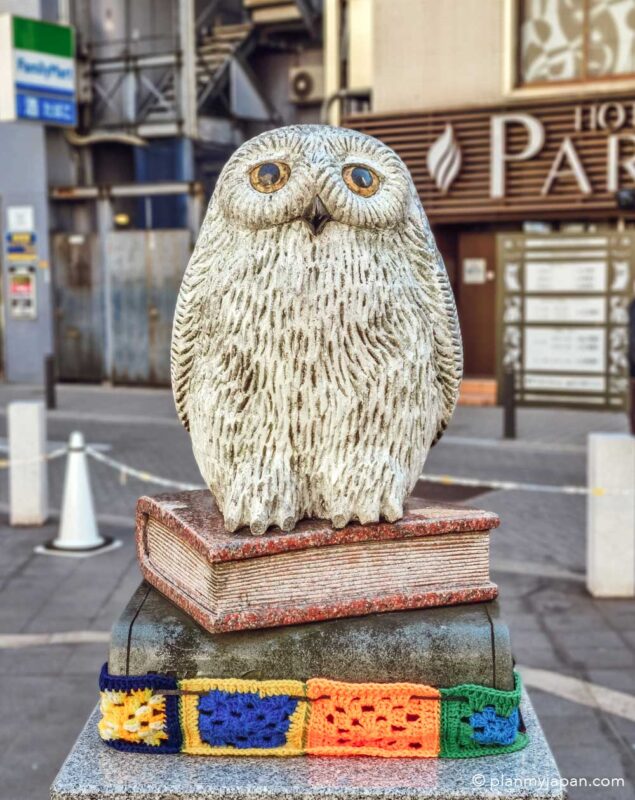
Whilst walking around the streets of Ikebukuro, you’ll likely spot some rather curious owls, either in hedge form (like there are near Ikebukuro JR west exit), cute cartoon owls or even as stone statues.
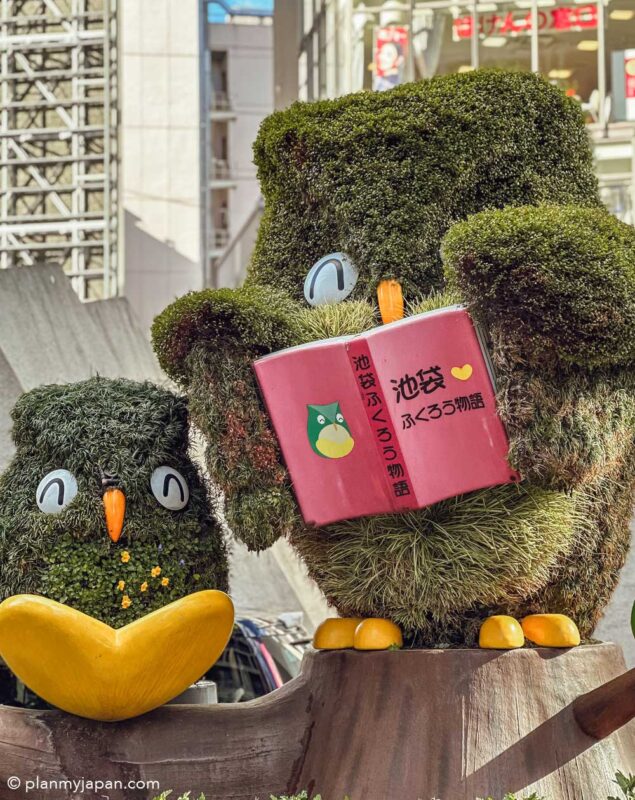
The most famous Ikebukuro owl statue is of a mother owl with her baby owl brood near Ikebukuro Station’s east exits (think of the Hachikō Memorial Statue in Shibuya but less well known).
And why are there so many owls in Ikebukuro? It is because the word ‘bukuro’ (as in Ike-bukuro’) sounds very similar to the Japanese word for ‘owl’ so the feathered friends are a marvelous mascot for the local area.
32. The Ichiran Ramen dining experience
Our favourite chain ramen restaurant in Japan, Ichiran Ramen is all about the dining experience – if you are so inclined, it is possible not to speak to anyone during the entire ordering and eating process.
Order at a machine choosing your preferred ramen requirements – you are then ushered into your very own dining booth (pull down the divider if there is more than one of you).

Then the unusual bit. A few moments later, the hatch in front of you magically opens up and your noodles are plonked down in front of you. There are even little wooden signs you can use if you don’t want to speak to staff (also handy if you don’t know Japanese).
There are around 100 Ichiran Ramen restaurants across Japan – it is one of the best ramen chain restaurants in Japan, usually costing around 900 Yen per bowl.
Shop for Ichiran Ramen products on Amazon >
33. Adult sections at Don Quijote
Most travellers to Tokyo will visit a Don Quijote store at some stage (there are over 600 in Japan) – every store usually has a weird and wonderful special section behind pink curtains.
Yes, it is ‘playtime’ for the adults at Don Quijote! Don Quijote Japan sells all manner of toys and we aren’t just talking about LEGO or Tomica!

Usually a curtained off section on the upper levels plastered with ‘Over 18s only / R18’, these sensual and alluring sections sell all manner of adult toys, from anatomically correct dolls complete with ‘openings’ through to wonderful willies and the like.
Take a look at the TENGA ‘suction’ section too!
At Don Quijote, you’ll find provocative chocolate shapes plus sultry anime plastic dolls and other adult orientated toys and games.

34. Swallowtail Butler Cafe
You’ve heard of maid cafes, so why not try a Tokyo butler cafe in Ikebukuro?
Swallowtail is a butler cafe staffed by men in traditional black and white waiting outfits, whose main training is to watch ‘Downton Abbey’ on repeat (probably).
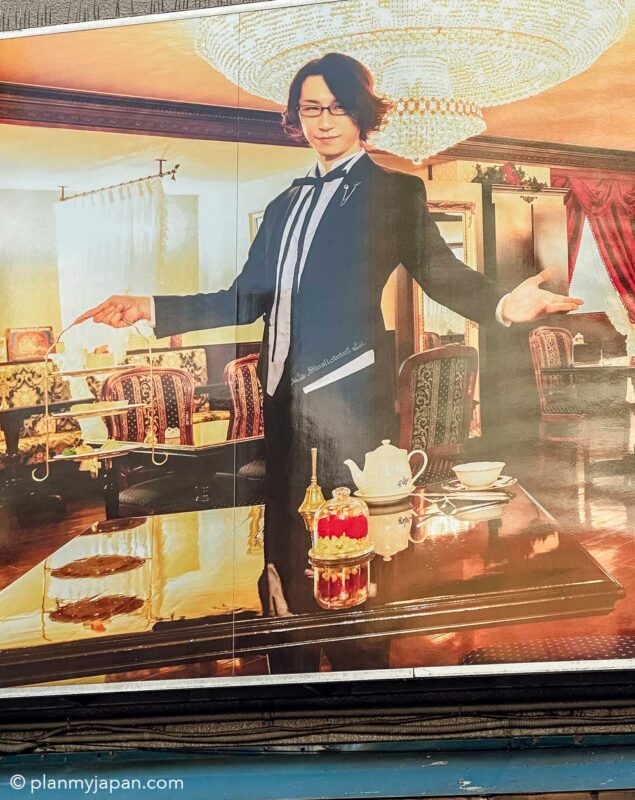
Once sat in the Swallowtail lounge, choose from an extensive afternoon tea menu or pamper yourself with some prosecco or champagne – cheers!
Each table has a traditional bell you can ring, beckoning your butler to bring you more. Alas photos are not allowed inside so make sure you take ‘mental pictures’.
35. Tokyo Night and Light Show (Godzilla) at Tokyo Metropolitan Government Building
The most famous free light show in Tokyo (Shinjuku), welcome to the world’s largest permanent projection mapping display on a building.

The projection mapping shows change regularly but we’ve seen everything from Pac-Man eating Tokyo to Godzilla destroying it. Even J-Pop videos to cool animated films all shown on the side of the building (we’ve visited on a couple of occasions).

Perhaps the most famous (and viral) projection at the Tokyo Night and Light Show is the Godzilla show – but please be aware the Godzilla show is only on weekends (Saturday and Sunday) and on public holidays.
Find out the light show times and how to visit the free Tokyo Metropolitan Government Building >
36. Sumo Wrestling Merchandise
Sumo Wrestling is a BIG sport in Japan (literally) and no trip to Japan is complete without purchasing tickets for a Tokyo sumo wrestling match at the Ryogoku Kokugikan National Sumo Arena.

If you go to a tournament, during the bout breaks, you can browse lots of super cool and slightly surreal sumo wrestling souvenirs.
Here you’ll find everything from sumo wrestling gachapon toy capsule machines to sumo wrestling magnets or sumo stickers (and even sumo wrestling fans in the shape of wrestlers faces).
You might like our guide to buying Sumo tournament tickets or 10+ best Tokyo sumo activities.

37. Tokyo’s Transparent Toilet Project
Possibly one of the more famous ‘unusual and weird’ Tokyo activities, we’ve seen these transparent Tokyo toilets on countless TV programmes and social media feeds.
Known as the transparent public toilets in Yoyogi Park, the toilets have a seemingly see through exterior until you lock the door so you can p*ss in peace – it was designed as a safety feature so you could ensure no-one was hiding in the toilet before you go in.
This is just one of 17 public restrooms in Shibuya that have a unique design, part of an overall concept called the Tokyo Toilet Project – no crap!
38. Thomas Edison in Asakusa
A fun free thing to do in Asakusa, Tokyo’s Bandai Namco Museum is dedicated to all things cute and Kawaii plus gachapons and gaming.
Split across two floors plus several large cartoon character models outside including Doraemon and Ultraman, the Bandai Namco museum is a must visit for any otaku fan.

Weirdly, there is also currently a temporary Thomas Edison museum exhibition on the second floor, which includes a waxwork of the former US President; it felt very Madame Tussauds.
Read our guide to Tokyo’s Bandai Namco Museum >

39. Akihabara Vending Machine Corner
Also known as horror vending machine or mystery vending machine alley, this is a very weird Tokyo attraction.
It is literally a dark and dinghy corner of Akihabara where you’ll find old vending machines, crammed into a very dirty space – it isn’t for claustrophobic people and the contents of the machines aren’t that great.

On our visit, most of the vending machines weren’t working and the inside area was just full of rubbish and detritus – make sure your tetanus vaccines are up-to-date.
We don’t think Akihabara Vending Machine Corner is worth a special visit and only go if you are really curious.
40. Samurai Restaurant
One of our BEST ever Shinjuku things to do was the famous Robot Restaurant which we wrote about here >
There are lots of rumours about it returning one day (which have never come to fruition) but for now, the nearest alternative is the Shinjuku Samurai Restaurant.
For an unforgettable night out in Kabuchiko, the Samurai Restaurant serves up dancers, robots and samurai while you eat and drink the evening away. The show consists of three acts and it is an explosion of the senses and a neon nirvana of bright lights and high energy performances.

You can choose from a bento box, ramen, sushi or udon noodles plus your tickets include two free alcoholic or soft drinks – the show is in English and for people over 18 years of age only.
Book your Samurai Restaurant dining experience with Viator or Klook.

Our final unusual Tokyo thing to do
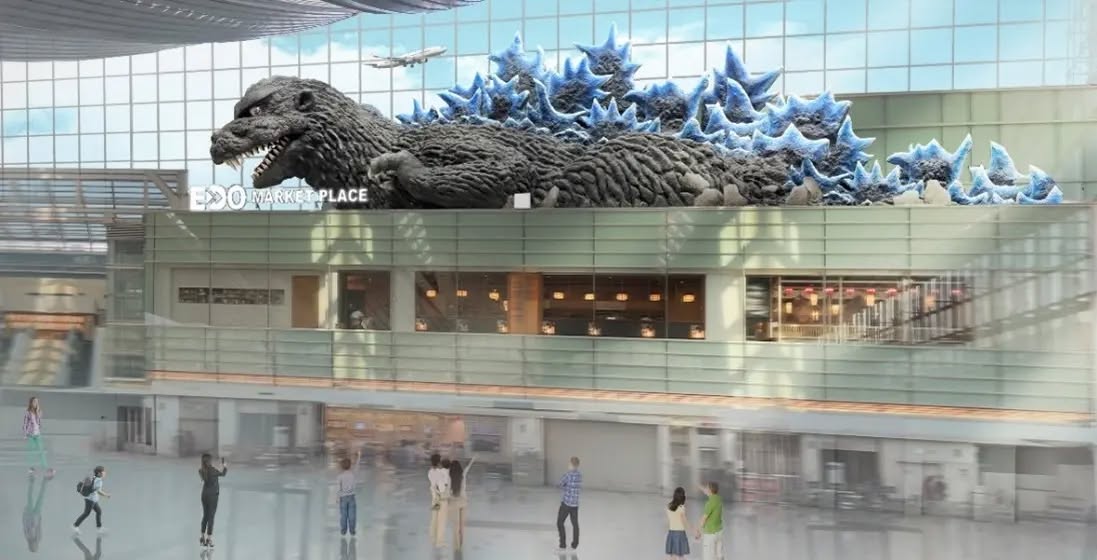
41. Haneda Tokyo Airport Godzilla
Coming soon to Haneda (Tokyo) Airport Terminal 3 – the world’s largest indoor Godzilla!
In late December 2025, a 40 metre long Godzilla will appear in the departure lobby looking out over the crowd – how ‘roarsome’ is that?
It is due to be on display for around one year with lots of other Godzilla installations and movie props also displayed in the terminal.
Below is a preview picture of what Haneda Airport Godzilla should look like:
Found this unusual, weird and wonderful things to do in Tokyo article helpful?
Did you enjoy our unusual, weird and wonderful things to do in Tokyo blog post? Let us know in the comments or by sharing it on social media.
You can follow us on:
Instagram
Tik Tok
Facebook
Pinterest
YouTube
Cool list, but I must have missed the presidency of Thomas Edison somehow.