

Asakusa in Tokyo is a rich mix of the old and new Japan, where the remains of Tokyo’s old Shitamachi city and historic temples combine with tall skyscrapers and an epic entertainment district.
It is perhaps most famous for the Senso-ji Temple and its extensive grounds but there is so much more to do in Asakusa.
This post may contain affiliate links to tours and hotels. These help us earn a small commission at no additional charge to you.

From daytime river cruises and underground shopping streets to the night-time delights (including an ‘underground’ ninja sake bar), Asakusa is an awesome Tokyo neighbourhood to visit day or night.
With delicious food and free activities like the Asakusa Observatory or a walk along Sumida River, there is something to suit all tastes and budgets in Tokyo’s Asakusa – and you can even visit Kappabashi, Tokyo’s famous ‘Kitchen Street’.
From Nakamise-dori shopping street to rickshaw rides and kimono rental, here is our ultimate guide to Asakusa in Tokyo, Japan with photos.
This article was originally published on 29 May 2024.

Japan checklist
We love using booking.com and agoda.com (use the Agoda code TAIWANDERERS for a discount) for researching and booking all our hotels. You can also purchase eSIMs from Airalo.
For booking tours, transfers and SIM cards we recommend Get Your Guide, Viator or Klook.
For booking rental cars visit Discover Cars.
Check out our Japan travel resources page >
How to get to Asakusa in Tokyo
The best way to get to Asakusa is by getting the train to Tokyo Metro Asakusa Station (浅草駅) – which has the Asakusa, Ginza, Ryomo, Tobu Railway and Tobu Skytree lines running through it.
Asakusa Station is centrally located and around a 1 minute walk to Sensō-ji shrine and all the main Asakusa shopping streets.

Asakusa is very easy to walk around but a fun way to do sightseeing is via a rickshaw ride with an experienced tour guide.
If you are visiting Asakusa from Odaiba, then you can arrive in style on a Tokyo Water Bus River Cruise via Ryogoku.

How to get to Asakusa from the airport
To get from Tokyo Haneda Airport to Asakusa, it is around a 50 minute direct journey on the Keikyu Airport line.
To get from Tokyo Narita International Airport to Asakusa, it is around a 1 hour 15 minute journey, using the Skyliner electric train from Narita to Nippori station, then taking the Ginza Line or Hokuso Line to Asakusa.
Read more in our detailed guide of how to get to Asakusa from Narita International Airport >
Alternatively, for stress free travel (especially if you have lots of bags), book a private transfer from the Tokyo airports to Asakusa.
Asakusa accommodation and recommended hotels
Budget ($)
Sakura Hostel Asakusa
Hostel with with English speaking staff offering both dorms and private twin rooms, communal kitchen and lounge. Check rates and availability on hostelworld.com, agoda.com, trip.com and expedia.com
Mid-Range ($$)
The Kanzashi Tokyo Asakusa
Budget to mid-range priced hotel located a a 4-minute walk away from Sensoji Temple with a rooftop terrace. Please note the cheapest rooms are really small. Check rates and availability on booking.com, agoda.com, trip.com and expedia.com

Mid-Range ($$)
Hotel Gracery Asakusa
Popular hotel chain with functional rooms, located a short walk away from the metro station and Sensō-ji temple. Check rates and availability on booking.com, agoda.com, trip.com and expedia.com

Luxury ($$$)
The Gate Hotel Asakusa Kaminarimon by Hulic
Modern and stylish hotel with dark-wood furnishings, located a 2-minute walk from the subway station. Facilities include a French cuisine restaurant with outdoor roof terrace. Check rates and availability on booking.com, agoda.com, trip.com and expedia.com
Luxury ($$$)
OMO3 Tokyo Akasaka by Hoshino Resorts
This hotel is highly recommended by several of our Japan Travel Tips Facebook group and is located a 1-minute walk away from Sensoji Temple. Facilities include a rooftop terrace, plus a 24-hour food and drink station on the top floor, allowing guests to enjoy snacks and beverages while admiring the night views. booking.com, agoda.com, trip.com and expedia.com
Check out the best hotels in Asakusa via Booking.com >
Plan My Japan tip – As Asakusa is so popular, accommodation can be expensive so you might want to consider staying in the nearby neighbourhood of Ryogoku. Ryogoku is a short walk along the river from Asakusa, plus is the historic home of sumo wrestling in Japan (it is where the national sumo wrestling stadium is located as well).
Asakusa, Tokyo – 33 top things to do
1. Asakusa Observatory (Free)
We start our ‘Asakusa Tokyo Things to do list’ with the best way to get a feel for the whole area from up high – head to the free Asakusa Observatory atop the Asakusa Culture Tourist Information Center.

Located on the top floor, the viewing deck is open daily from 9am until 10pm and offers stunning views of Sensō-ji temple, nearby Nakamise-dori Street plus a view of the Sumida River and the Asahi Golden Flame building (jokingly known locally as the ‘golden turd’ due to its interesting shape – more on this later).

One of the best free things to do in Asakusa, the observatory can be accessed via the lifts. The tourist information centre below is also very useful with information leaflets in various languages, incredibly helpful staff and some cute Asakusa souvenirs.
2. Nakamise-dori Street
One of Asakausa’s main shopping streets and located in the shadow of Sensō-ji, Nakamise-dori Street has been around since the 17th century (although they weren’t likely selling Doraemon figures or gachapon toys back then).

Nakamise-dori Street has dozens of small stalls selling everything from traditional suites to kimonos, cute Kawaii toys to religious trinkets.
Given Nakamise-dori shopping area comprises long streets of shops running in parallel to each other, it can get VERY busy at times, especially during public holidays, weekends and in the New Year. We were lucky enough to spend New Year’s Day here once and it was rammed!

At the main entrance to Nakamise-dori, look for the Kaminarimon Gate / Thunder Gate, which has guardian statues atop, some with old heads and young bodies.
Plan My Japan tip – many of the stalls sell the same things so if you want to grab bargains, look around and browse before buying – this is how we managed to secure Doraemon keyrings at discount!

Love cute and ‘kawaii’ stores in Japan?
Check out our shopping guides!
• Tokyo Character Street stores
• Studio Ghibli stores
• Don Quijote stores
• Doraemon Future Department store
• B-Side Label stores
• Mandarake stores
• Best Gachapon Capsule toys
• Pokémon Center Mega Tokyo
Plus our guide to the best kawaii things to do in Tokyo >
3. Sensō-ji
Is this Tokyo’s most beautiful temple? If not, Sensō-ji is certainly the busiest temple in Tokyo given its urban setting and close proximity to the Metro.
Although many of the buildings are quite recent due to the bombing in World World II, Sensō-ji was first established in 645 AD making it Tokyo’s oldest Buddhist temple.

Also known as Asakusa Kannon, Sensō-ji is the city’s most sacred and sublime Buddhist temple (although not necessarily the most serene given all the crowds and tourists).
Sensō-ji is a must do attraction in Asakusa, just to see locals at worship, explore the grounds and see the guardians of Hōzōmon Gate.

The grounds contain a five storey pagoda which you can see from all over Asakusa, the main hall which houses the original Kannon image.
In 628 AD, several fishermen were said to pulled out a small gold statue of Kannon – the Buddhist goddess of Mercy. The small shrine to Kannon then grew over the years becoming Sensō-ji.
A common topic in our Plan My Japan Facebook group is how crazily busy Senso-ji gets in the daytime and at weekends so if you don’t like crowds, maybe try to visit first or last.


4. Asakusa Underground Street
Top Tokyo shopping, subterranean style! Tokyo’s oldest underground shopping area built in the 1950s, Asakusa Underground Street is home to Japanese eateries, vintage record stores, dodgy DVDs, a ninja sake bar and the new (but old style) Drive‑In Denden, a retro style standing bar.

It is a cool way to exit Asakusa station and browse all the basement bargains and vintage shops – atmospheric AF, also be aware it can be quite damp and slippery in parts.
As well accessible from the Metro station and a couple of staircases by Shin-Nakamise arcade, this is also a great way to get into the Matsuya department store basement food court, full of delicious and cheap Japanese food (one of Asakusa’s foodie hidden gems).

New for 2025, Drive-In Denden has now opened, a subterranean standing bar whose frontage can only be described as a neon nirvana and retro.
A veritable vintage of old school signs and faded furniture, here you can eat and drink listening to classic Japanese tunes. Behind the counter, they even have an original sign for ‘Asakusa Hanayashiki’, the oldest theme park in Japan.
You might like – Our guide to Tokyo’s best craft beer bars >
5. NinjaBar Asakusa
Heard about the ‘underground’ ninja bar in Tokyo? Asakusa is usually associated with Sensō-ji Kappabashi street but beneath its streets lies a very unique and unusual thing to do in Tokyo – the subterranean NinjaBar, Tokyo’s top themed ninja bar.

A sake and beer bar operated by a secretive and stealthy ninja, the NinjaBar is a fun night out in Asakusa and a fun experience with over 300 sakes to choose from.
From the quirky interiors to drink prices (and the samurai sword toilet key), release your inner ‘otaku’ with our full guide to drinking in Tokyo’s NinjaBar >

Try this – Samurai Training Tokyo Asakusa >
6. Don Quijote Asakusa
Don Quijote Japan discount department stores are home to thousands of items generally at low prices, from sneakers to stationery, Hello Kitty to crazy Kit Kat flavours (plus more interesting ‘adult sections’ selling TENGA and more).
There are over 600 Don Quijote stores in Japan including around 50 extra large MEGA Don Quijote shops.

Japan’s most joyful discount store, Don Quijote Asakusa is open 24 hours a day and is also a good place to buy cheap alcohol, fashion goods, Japanese souvenirs and pharmaceuticals. You can benefit from tax free shopping too if you take your passport.
Check our epic guide to Don Quijote stores in Japan here >

Try this – Asakusa, Tokyo’s #1 Family Food Tour >
7. Asakusa Hanayashiki
Dating back to the 1850s, Asakusa Hanayashiki is amazingly Japan’s oldest amusement park.
Starting life as a flower park before then becoming a zoo, Asakusa Hanayashiki is now home to various theme park rides and gachapons galore.

Aimed at smaller kids, rides include a merry-go-round, swan boat rides, a small pirate ship plus their famous panda cars – this place really puts the kitsch into Asakusa.
Asakusa Hanayashiki 2025 admission fees for the amusement park are 1,600 Yen per adult, 800 Yen for children between 5 and 12, plus free admission for children 4 years and younger. Book your tickets in advance >

You might like – Things to do in Tokyo with kids >
8. Asakusa Nishi-sandō shopping street
Close to Senso Ji, Asakusa Nishi-sandō Shopping Street is an all weather affair, with dozens of shops, izakaya bars and restaurants under one roof.

Aasakua Nishi-sando (浅草西参道商店街) is an alleyway mall dating back to the 1950s, with places to shop and eat in along either side.
Often strewn with lanterns or decorations during festivals and public holidays, some of the most popular places to eat along Asakusa Nishi-sandō Shopping Street include Warabimochi Motoko (magical mochi) and Hokkaido Milk Bar.


Try this – Asakusa Cultural Walk and Matcha Making Tour >
9. Bandai Namco Museum
A fun free thing to do in Asakusa, Tokyo’s Bandai Namco Museum is dedicated to all things cute and Kawaii plus gachapons and gaming.

Split across two floors plus several large cartoon character models outside including Doraemon and Ultraman, the Bandai Namco museum is a must visit for any otaku fan.

It takes a detailed look at Bandai Namco’s rich history plus has cabinets and display cases full of retro games and modern merchandise – it even has a rather unusual temporary Thomas Edison museum display on the upper floor, which we include in our weird and wonderful Tokyo guide.
From what to expect in the museum and all the characters inside, here is our guide to Tokyo’s Bandai Namco Museum in Asakusa.

Join our Facebook Japan Travel Tips Group!
Need help with your Japan itinerary or have any questions?
Head on over to our friendly Facebook group with 130,000+ members and ask the experts!
Click here to join our group >
We also run a brand new Japan Hauls, Souvenirs and Shopping Tips group >
Or if you just want to see more of our Japan photos and videos, follow our Plan My Japan Facebook page >
10. Tonkatsu Oribe restaurant
Here at Plan My Japan, we love Japanese Tonkatsu and dare we say we’ve eaten dozens in our time spent in Japan.
We’ve raved about the cheap chain delights of Matsunoya Tonkatsu but in terms of our favourite / best tonkatsu in Tokyo, it has to be Tonkatsu Oribe restaurant in Asakusa.
Tonkatsu Oribe takes tonkatsu to the top tier (try saying that with a mouthful of tender pork tonkatsu).

The quality of meat here was so incredible and it is served medium so the tonkatsu retains its juices and the breadcrumb batter is spot on!
It is making our mouths water just thinking about it – even their tonkatsu sauce is so rich and they used a special rock-salt to bring out the flavours.
There are only two Tonkatsu Oribe restaurants in Tokyo (and Japan) – Tonkatsu Oribe Asakusa branch and Tonkatsu Oribe Kanda Jinbocho branch. Eat here and you will not be disappointed!
Try this – Top things to do and tours in Asakusa >
11. Kappabashi Street and ‘Sampuru’
Asakusa’s Kappabashi Street is a culinary gem – often referred to as Tokyo’s Kitchen Tool Street or fake food capital, this is where you can buy a huge range of kitchenware, Japanese knives plus a cavalcade of cutlery.
Known locally as Kappabashi Dogugai かっぱ橋道具街, it is around a 15 minute walk from the main Asakusa shopping area and Senso-ji Temple – and don’t forget to look up for the giant chef’s head peering down or the colossal crockery balcony…

Better yet, Kappabashi street is where you can make your very own plastic Japanese foods (‘Sampuru’) – the ones you see in numerous restaurant windows.
You can make everything from plastic pork dishes to Sampuru sushi – talk about fantastic plastic. It looks good enough to eat (but please don’t)!
Try these Kappabashi street tours and food making experiences or this Japanese Plastic Food Making Experience.
Read more in our Kappabashi Street guide >


You might like – Our guide to Tokyo’s largest Uniqlo in Ginza, Tokyo >
12. Asakusa Yokocho
Asakusa Yokocho is a neon hotbed of cool street food eateries and Japanese restaurants with some top theming (you can even pose as a ninja next to a well ‘lit’ neon background).


As well as an epic epicurean experience day or night, you can hire traditional costumes here plus in the daytime, there is a nice outdoor terrace (although not on the scale of Asakusa Observatory).
Inside, you’ll find everything from iconic izakaya bars to sushi and sashimi plus Korean fried chicken. People come here for the festive theming of Asakusa Yokocho so some say this appears to be the focus more so than the food quality.


Try this – Asakusa Night Tour with Tokyo Skytree Tickets >
13. Tokyo River Cruise / Water Boat from Asakusa to Odaiba
Head on down to the Sumida River and jump aboard a sleek cruise boat at Asakusa Hinode Pier – the boats shuttle between Asakusa and Odaiba on a regular basis and will stop by request at Ryogoku.

We did the boat from Odaiba to Asakusa and it is an amazing way to see Tokyo from the water – just remember to duck underneath the bridges!
The Tokyo river boat cruise fare from Asakusa to Odaiba is 2,000 Yen per adult as of October 2025 or 1,400 Yen via the water bus.
The Asakusa to Ryogoku water bus fare is currently 400 Yen per adult.
Please note the water bus and river boat cruises are different fares and different companies – the water bus is usually cheaper
Find our more about the Tokyo cruises and timetables here >
Book your Asakusa to Odaiba Mizube Line River Cruise with Viator.
You might like our guide to the best things to do in Odaiba, Tokyo >

Try this – Tokyo downtown bicycle tour Tokyo Backstreets Bike Tour >
14. Kimono Rental
Given all of the historic temples and ancient alleyways in Asakusa, traditional kimono rental is a popular activity to explore the streets and sights.
You can either hire costumes and take them out for the day or some kimono rental agencies can also organise professional photographers to accompany you.

There are several places to hire kimonos in Asakusa including:
- Kimono Yae Rental Experience in Asakusa >
- Kimono Rental Experience at Kimono Komachi Ruri Asakusa >
- Traditional Kimono Rental Experience at WARGO Asakusa >
You might like – Tsukiji Outer Market Tokyo (formerly Tsukiji Fish Market) Guide + Photos >
15. Asakusa Street food
Asakusa is a great neighbourhood for cute street food snacks and desserts. Some delicious bites you can find include:
- Mont blanc matcha ice cream from Chacha Futatsume
- Melonpan from Asakusa Kagetsudō
- Tempura Crisps from Asakusa Seisakusho
- Mitarashi dango from Asakusa Soratsuki or Kikuya
- Unagi yaki-onigiri from Asakusa Unana
- Kare Pan (Curry Bread) from Tokyo Curry Pan
- Cream soda from Taisho Romankan
- Matcha desserts and beer from Kaminari Issa
- Sweet potato desserts from Imoyasu or Imo Pippi
- Menchi katsu meat croquette from Asakusa Menchi
- Takosen (takoyaki taco) from Asakusa Taco-Taco Koromo Brothers

Try this – 2-Hour Asakusa Food Hunt & Cultural Tour with a local guide >
16. Asakusa Rickshaw ride
The best way to see Asakusa has to be with a traditional rickshaw ride – let your licensed guide take the strain and carry you across Asakusa (seriously, their legs are so muscly).
Rickshaw rides typically last anything from 30 to 70 mins and are also a great place to access old buildings and temples like Senso-ji where cars are not allowed.

See old world Toyo and epic Edo period experiences from the comfort of your own carriage.
Try these rickshaw experiences
- Tokyo Rickshaw Experience Tour with Licensed Guide >
- Sushi making experience + rickshaw tour >
- Rickshaw Ride in Asakusa with GetYourGuide >

17. Taiyaki Sharaku
Time for some Taikyaki! Tokyo’s top Taiyaki shop is right here in Asakusa. If you haven’t tried taiyaki before, it is a famous Japanese dessert dish, usually served in a fish shape with a creamy or gooey filling inside like chocolate or red-bean.

A hole in the wall affair and family run business owned by an old couple, Taiyaki Sharaku is warm and filling plus not too overly sweet or sickly – it is also one of the cheapest sweet treats to try in Tokyo too!

You might like – 35 Japanese foods you must try >
18. Hoppy Street
Kanpai to Asakusa’s Hoppy Street, packed full of izakayas, outdoor bars and a generally very merry place to be in Tokyo!
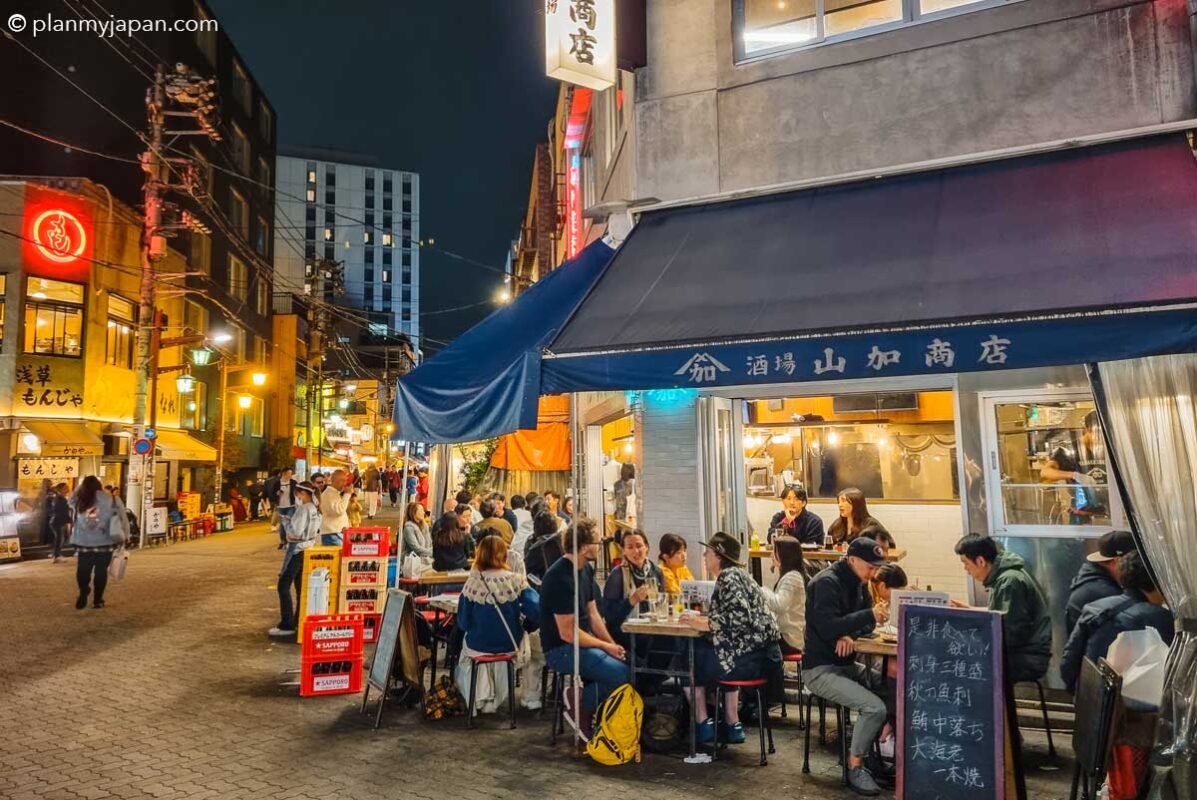

Hoppy Street lives up to its name and is full of boozed up characters, happy hours galore and some delicious smelling soul food like yakitori skewers or steaming bowls of ramen.
Open until very late, this is an awesome and atmospheric drinking street to visit at night, sip some sake and get friendly with the local – so hop on over to Hoppy Street.
Read more in our Hoppy Street guide >


In the Asakusa Uniqlo store you can buy Hoppy Street clothing – more on this Uniqlo store later!

Try this – Meiji Shrine, Asakusa Temple and Tokyo Tower Day Tour >
19. Denboin Street – Unique Souvenirs
An old fashioned shopping street in Asakusa (a bit like an outdoor version of Nishi-sandō shopping street), Denboin Street is home to lots of traditional shops and hand crafted goods – you can also turn your own hand to making unique gifts to take home.

As well as textiles, glassware and fabrics, there are lots of wonderful workshops like making your own rings / pendants. Or if you would rather let an expert do it, you can ask customise rings or chopsticks it to your preferences – what a ‘gem’ of a thing to do in Asakusa.

Or just treat yourself to marvellous matcha flavoured snacks in Asakusa’s Denboin Street like matcha flavoured beer, matcha ice-cream or matcha ‘montblanc’ dessert (a noodle-like chestnut cream speciality).

You might like – Our guide to the 30+ best Tokyo malls and shopping districts >
20. Sanrio Gift Gate Asakusa
You may well have already seen Asakusa’s famous Sanrio Gift Gate shop already as there are so many TikTok and Instagram videos about it – it is easy to spot as there is a huge Hello Kitty welcoming you outside. It is a cool Kawaii thing to do in Tokyo.

With several floors of Sanrio souvenirs, here you’ll find all your favourite cute and Kawaii characters from Kuromi to Keroppi, Pompompurin to Pocaccho. It is also one of the best places in Tokyo for Gudetama gifts – eggs-cellent stuff!
Sanrio Gift Gate is open 7 days a week from 10.30am to 6pm – correct as of October 2025


Try this – Tokyo: Sushi Making Cooking Class in Asakusa >
21. Suzukien Asakusa
A matcha made in heaven, Suzukien Asakusa is renowned for its matcha gelato and sublime sweet treats.
There are several levels of richness / matcha strength to choose from (a n-’ice touch) and you can opt for a cone or bowl.

Level 7 matcha gelato is said to have one of the highest matcha concentrations in the world plus their hojicha and black sesame dessert is highly recommended.
If you don’t fancy gelato, you can purchase a matcha chocolate set that has all 7 flavours and levels of matcha – a tea-riffic taste sensation!
22. Asakusa Sumo Club Sumo Show Admission with Chankonabe
Sumo Wrestling is a BIG sport in Tokyo (literally) and no trip to Asakusa is complete without purchasing tickets for the local sumo club and enjoying a hearty chankonabe dinner (sumo stew).
If your trip to Tokyo coincides with one of the three national sumo tournaments held at Ryoguku stadium (usually in January, May or September), we’d recommend you try and get tickets (but they do sell out very fast).

Failing that, pay a visit to Asakusa Sumo Club, a fun night that allows you to get up close and enjoy epic matches in the dohyo (sumo ring) with former professional sumo wrestlers – or be brave and have a go yourself.
The night also includes all you can eat food (so you can bulk up like a real sumo wrestler) and take away a souvenir goodie bag including a photo with sumo wrestlers.
Book your Asakusa Sumo Club Sumo Show Admission with Chankonabe dinner tickets with Klook >
You might like – Top 10 Tokyo sumo wrestling activities or our guide to getting sumo national tournament tickets
23. Uniqlo Asakusa store
Asakusa’s unique Uniqlo store has a couple of storeys and we think this is one of coolest UNIQLOs in Tokyo.

In addition to the usual Uniqlo high quality clothing like thermals, winter jackets and jeans, the Asakusa Uniqlo also has a special UT basement section with a personalized clothing section (‘UTme!) where you can create your own designs and see them printed.

Customising your own Uniqlo bags or tops using the tablets is really simple plus it has designs and embroidery icons that are unique to UT Asakusa like Asakusa Hanayashiki, Marugoto Nippon or Hoppy Street T-shirts (cheers to that)!
We really like the UNIQLO replica furry panda on display, which is a nod to the panda ride at nearby Asakusa Hanayashiki.
Uniqlo Asakusa is open daily from 10am to 8pm.

24. Edo Taitō Traditional Crafts Center
Get up close to arts and old fashioned techniques at the Edo Taitō Traditional Crafts Museum, with a charming and compact collection of over 200 exhibits over two floors, including Edo-kiriko (cut glass).
A free thing to do in Asakusa, this is a nice thing to do on a rainy afternoon but perhaps not an essential Asakusa activity.

Try this – Tokyo Japanese Dance Cabaret at Theater Asakusa-Kaguwa >
25. Sumida Park
A nice little park to escape the business of Asakusa, Sumida Park blooms into life every spring with some epic displays of cherry blossom / sakura.

It is a small stretch of riverside parkland and a nice way to see the cruise boats and a cool view of the Tokyo Skytree and surrounding skyline. It is also the home to the annual Sumida River fireworks display every July.

You might like – the best parks and gardens in Tokyo >
26. View the golden turd of Asakusa AKA Asahi Beer Tower
One of the funniest things to do in Asakusa is to head to the river and see the ‘golden turd’ – well it isn’t actually that but many locals think it resembles this – and we don’t want to ‘poo-poo’ the idea.

Walk down to Sumida River Walk by Azuma Bridge and take a look up – you’ll see the Asahi Beer Head Office (said to look like a pint of beer).
The sculpture on the top is meant to look like a yellow flame as well but the locals jokingly refer to it as the ‘golden turd’. Genius!
Actually, we went to the building one day and there is a nice Asahi craft beer bar inside plus a huge beer hall, Flamme d’or. So raise a glass and enjoy an ice-cold beer after a day of exploring – kanpai!
You might like – Our guide to Tokyo’s oldest beer hall, Ginza Lion beer hall >
27. Tori-no-Ichi (every November)
A religious festival and celebration held at Otori shrine and Sensoj-ji in Asakusa, Tori-no-Ichi takes place over two several separate days every November and dates back to the Edo period.

Locals come to the shrine to make wishes and blessings and to buy ‘kumade’ (beautifully decorated bamboo rakes) which ‘rake in’ wealth and gold coins (a sign of prosperity).
The Tori-no-Ichi 2025 festival in Asakusa runs for 24 hours on both the 12 and the 24 November and there will also be lots of food and special souvenir stalls.
Check out our monthly Tokyo events guides hub >

28. Tokyo Go Kart
See Asakusa from a different angle by go-kart. Whizz around the streets of Tokyo driving through the coolest Tokyo neighbourhoods including Akihabara, Shinjuku and Asakusa.
Dress up as your favourite cartoon character and release your inner otaku.
You can pay extra for an action camera – please note an international drivers licence is required to go street karting in Tokyo.
Book your Tokyo Go Kart with Viator or Get Your Guide.
29. Daikon Radish festival at Matsuchiyama Shoden
Yes, you read that right – in addition to the more famous Asakusa annual Sanja Matsuri festival, there is a lesser known daikon radish festival held every 7th January at Matsuchiyama Shoden.

We were lucky enough to catch Daikon Radish festival one January afternoon whereby worshippers gift daikon radishes to the deity Shōden.
Hundreds of radishes are left in the main hall at Matsuchiyama Shoden, culminating in them being chopped up, served with miso and given back to locals.
The Tokyo Daikon Radish festival at Matsuchiyama Shoden lasts one day (7th January) and we also witnessed a traditional dance show and puppetry performances. The daikon radish festival is free to attend.

You might like – Top 40+ Daiso Japan products to buy >
30. Asakusa Shrine
A small Shinto shrine close to Senso-ji, this is also a nice place to escape the hustle and bustle of the more popular temple nearby.
Asakusa shrine was built in the late 1640s in honour of the fishermen who established Senso-ji – it is one of only two historic buildings in the area to survive the World War II bombing and is marked by a large grey Torii gate at its entrance.
Try this – From Asakusa: Old Tokyo, Temples, Gardens and Pop Culture >
31. Sumida River walk to Ryogoku
One of our favourite activities when staying in Asakusa was to walk over to the Sumida River from Asakusa to Ryogoku, to visit all the sumo wrestling activities.

The walk from Asakusa to Ryogoku’s famous Samurai Sword Museum takes just over 20 minutes along the Sumida river banks.
There is a little bit of street art along the way plus you’ll see all the boats coming and going between Odaiba and Asakusa.

You might like – Things to do in Odaiba, Tokyo >
32. Asakusa tea shops and tasting
Given the historic status and numerous old alleyways in Asakusa, it comes as no surprise that there are numerous tea shops and ceremonies you can enjoy.
Chazen is a relatively new tea room where you can make traditional Japanese sweets and matcha tea.
Or you can learn about Chado in Asakusa, a traditional zen tea ceremony which links mindfulness with tea-making in an authentic tea-room setting.
Alternatively you can book this Kimono Tea Ceremony at Tokyo Maikoya.
One of the more relaxing things to do in Asakusa, this is definitely our ‘cup of tea’.
You might like – Our guide to Studio Ghibli Clock near Ginza, Tokyo >
Asakusa, Tokyo – Our final thing to do
33. Other Asakusa Festivals
Given Asakusa is one of Tokyo’s best neighbourhoods for travellers to visit, there are lots of festivals (and not just the radish festival we mentioned earlier).
Popular Asakusa festivals include:
- Sumida River Fireworks festival – held annually every June
- Sanja Matsuri – a three day Asakusa festival held in mid May, attracting over a million visitors each year. Over 100 floats circle Senso-ji and there are numerous celebrations
- Asakusa hatsumode – visiting temples to ring in the New Year and in early January to pray for good luck and fortune. We visited Senso-ji on New Year’s Day (January 1) and there was a huge queue to get in (but well worth it)
You might like these Tokyo neighbourhood guides:
Akihabara
Asakusa
Ginza
Harajuku
Ikebukuro
Nakano
Odaiba
Ryogoku
Shibuya
Shimokitazawa
Shinjuku
Also check out our
Where to stay in Tokyo guide
Found this article helpful?
Did you enjoy our Asakusa article? Let us know in the comments or by sharing it on social media.
You can follow us on:
Instagram
Tik Tok
Facebook
Pinterest
YouTube